
How Mold Affects Kids and Seniors
February 22, 2026
Preserving the Wood: Managing Moisture in Historic Lithuanian Farmhouses
April 16, 2026
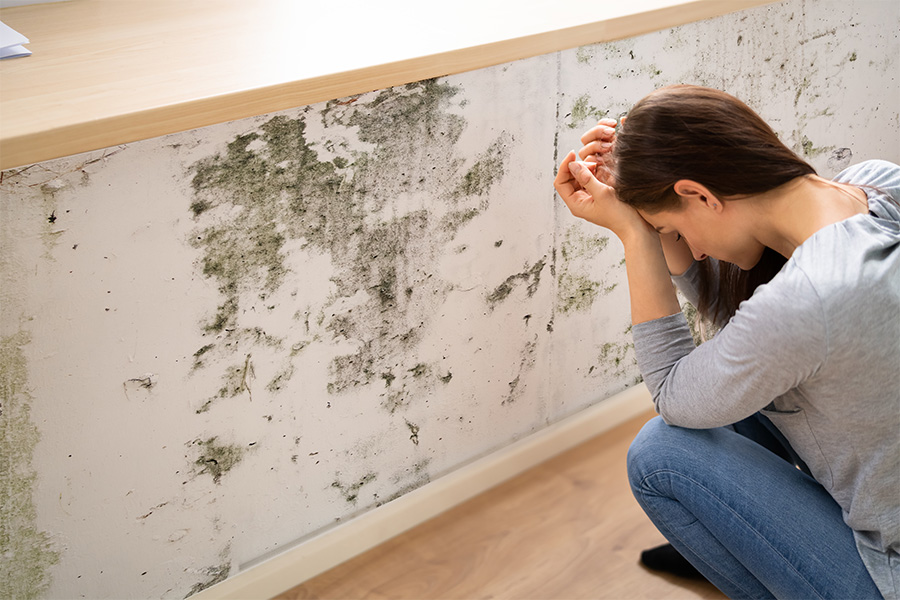
If you live in a classic brick or “panel” apartment block in Vilnius, Kaunas, or Klaipėda, you are likely familiar with the seasonal ritual: the weather turns cold, the windows start to “sweat,” and a stubborn grey or black shadow begins to creep across the upper corners of your outer walls.
In Lithuania, this isn’t just a matter of cleanliness—it’s a structural phenomenon known as a “Cold Bridge” (Šalčio tiltas). Understanding why this happens is the first step toward reclaiming your air quality.
What Exactly is a “Cold Bridge”?
A cold bridge occurs when a specific part of a building’s structure—usually a corner, a concrete lintel above a window, or a poorly insulated joint—allows heat to escape much faster than the rest of the wall.
In many Soviet-era buildings, insulation was either inconsistent or has degraded over the decades. When the brutal Lithuanian winter hits, these specific spots become significantly colder than the rest of your room.
The Science of the “Sweat”
The mold doesn’t actually come from the wall; it comes from the air. Here is the mechanical process:
- Warm Air, Cold Surface: Your indoor air is warm and holds moisture (from cooking, showering, and even breathing).
- Condensation: When that warm air hits a “cold bridge” spot on the wall, it reaches its dew point. The moisture turns into liquid water, creating a damp patch.
- The Spore Buffet: Mold spores, which are always present in the air, find this consistent water source and begin to feast on your wallpaper, paint, or plaster.
Why Soviet-Era Blocks are Especially Vulnerable
Most of these buildings were designed with natural ventilation systems that relied on “leaky” wooden window frames to pull fresh air in. When we replace those old frames with modern, airtight plastic (PVC) windows, we inadvertently turn our apartments into sealed plastic bags. Without the old drafts, humidity levels skyrocket, and the “cold bridges” become the only place for that moisture to go.
3 Practical Strategies to Fight Back
While a full external wall insulation (renovacija) is the ultimate cure, there are steps you can take right now:
- The “Rule of Three” Ventilation: During the heating season, do not leave windows on “micro-ventilation” all day. Instead, three times a day, open your windows wide for 5–10 minutes. This replaces the humid air with dry outdoor air without significantly cooling down your furniture and floors.
- Monitor the 50% Threshold: Invest in a simple hygrometer. In a Lithuanian winter, you want to keep your indoor humidity between 40% and 50%. If it climbs higher, your cold bridges will get wet.
- Clear the Corners: Move heavy furniture (like wardrobes or sofas) at least 10cm away from outer walls. Air needs to circulate behind them to keep the wall temperature high enough to prevent condensation.
When to Call the Professionals
If the mold has already penetrated the plaster or covers an area larger than one square meter, surface cleaning with vinegar or store-bought sprays is only a temporary fix. In these cases, the “bridge” may need internal thermal padding or specialized antifungal primers to stop the cycle for good.
Does your apartment have a “problem corner”? Share your experiences and what has (or hasn’t) worked for you in the comments below.